On June 9, USDA’s Animal and Plant Health Inspection Service halted pet dog exports to Mexico. On June 10, it reversed the decision and pet dogs were traveling again under previously established procedures.
Twenty-four hours. If you had a flight in between, you had a problem.
The trigger was New World screwworm — a parasite whose northward movement has been reshaping animal movement rules between the two countries for well over a year, and which had produced, in the words of Under Secretary Dudley Hoskins on June 9, four confirmed detections in the United States in a single week. That same week, Mexico and the United States agreed to suspend live animal trade between them as a precautionary measure.
Pets came out the other side of that decision largely intact. But the episode is a useful reminder that the pet rules on this border are now the fastest-moving paperwork on your trip.
Here is where things stand.
Going south: what Mexico actually asks for
SENASICA, Mexico’s agrifood health authority, removed the mandatory zoosanitary certificate for dogs and cats arriving directly from the United States and Canada in 2019. From any other origin, you still need an original good-health certificate issued by a licensed veterinarian on letterhead, valid no more than 15 days from issuance.
Worth knowing: several consular pages still publish the older certificate requirement, and guidance has not been updated everywhere in step. That mismatch is a good reason to carry a current health certificate even on a U.S. or Canadian departure. It is never a problem to have one.
What has not changed is that every animal is inspected on arrival. At the OISA counter, an officer reviews documents and physically examines the pet, then issues the import certificate on the spot. It is not something you arrange in advance.
What officers look for:
- Rabies vaccination, with the application date and validity documented. Animals under three months old are exempt.
- Internal and external parasite treatment within the previous six months, and no visible ectoparasites. If any are found, treatment happens there, at the owner’s expense, before the animal is released.
- A clean carrier with no bedding, no toys and nothing of ruminant origin. This one surprises people constantly. The blanket your dog sleeps on is exactly the item that gets pulled.
- One day’s worth of dry food, which is what you are allowed to bring.
The service is free for up to three pets per traveler. Beyond that, fees apply.
Our advice, regardless of what the rules technically require: carry the vaccination record anyway. It weighs nothing and it ends conversations quickly.
Coming north: two separate agencies, two separate documents
This is where people get caught, because most owners know about one requirement and not the other.
The CDC form. Since August 1, 2024, a dog entering or returning to the United States that has only been in dog-rabies-free or low-risk countries in the previous six months needs one document: the CDC Dog Import Form. Mexico is on the low-risk list. The form is free, completed online, and produces a receipt you can print or show on your phone. Two hard conditions come with it: the dog must be at least six months old on arrival, and it must have a universal microchip.
The receipt stays valid for six months and covers multiple U.S. entries, provided the dog has not visited a different low-risk country or any high-risk country in between. Fill it out days in advance if you can, though it can be done on the day of travel.
The APHIS screwworm certificate. Separately, and since an import alert took effect on July 9, 2025, dogs entering the U.S. from Mexico require a health certificate from a Mexican veterinarian approved by SENASICA, certifying that the animal was inspected for screwworm within five days before shipment and is free of it. If an animal is found infested, it must be treated and held until clear before traveling.
Five days is a short window. It is the single most common reason a pet gets left behind on a return leg, and it is entirely avoidable with one phone call at the start of the trip rather than the end of it.
What a private cabin actually changes
The regulatory requirements are the same whether your dog flies commercially or with us. Everything around them is not.
- No hold. Your pet travels in the cabin regardless of size or breed. There is no temperature embargo, no summer blackout period, no separation at check-in, and no cargo terminal at the far end.
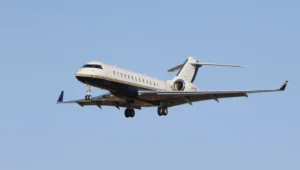
- No breed restrictions. Brachycephalic breeds — bulldogs, pugs, boxers — face the greatest risk in commercial cargo, and several carriers refuse them outright. In a Hawker cabin the question does not arise.
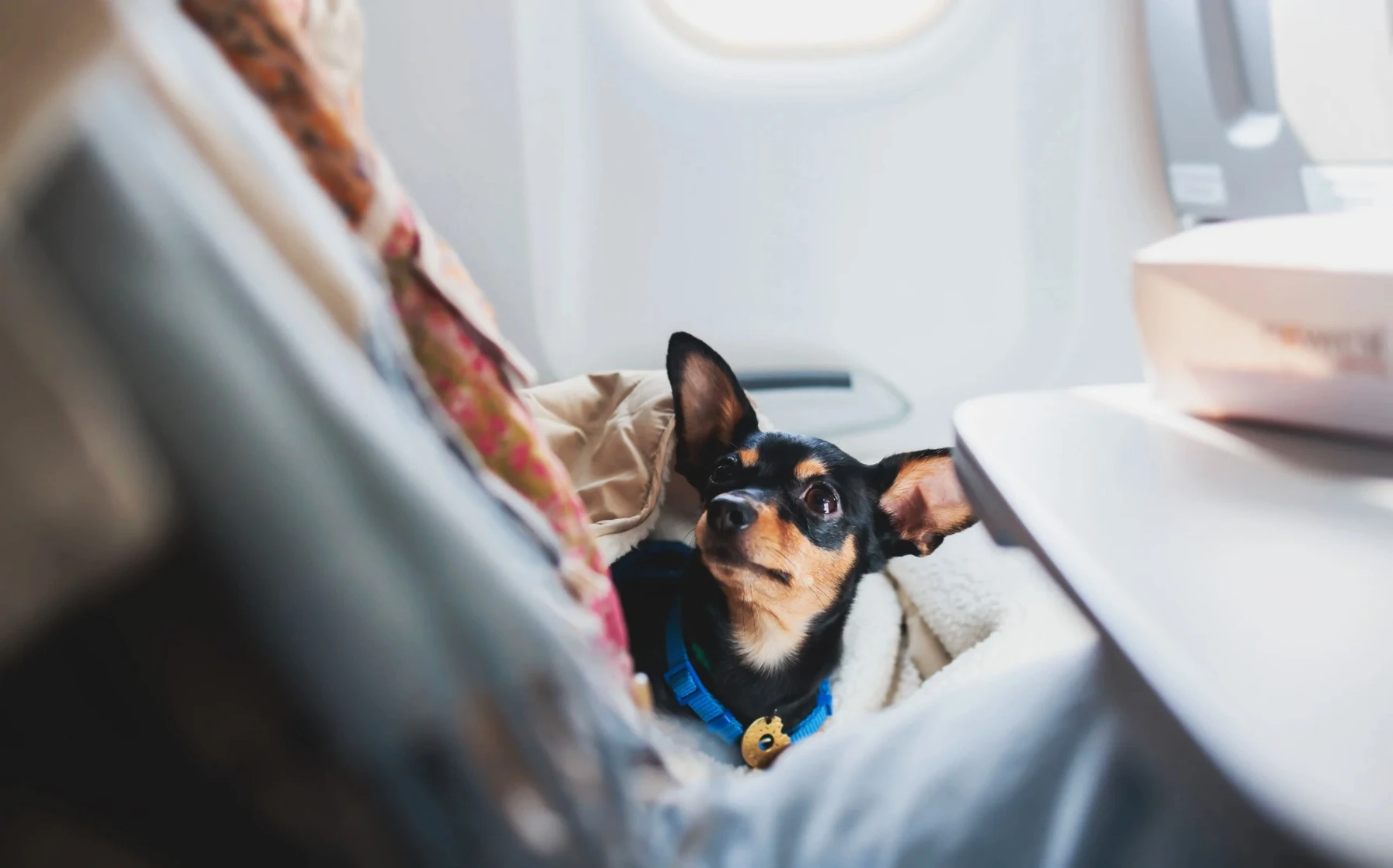
- Sedation becomes unnecessary, which is the point. Most veterinarians advise against sedating animals for flight because of respiratory and cardiovascular risk at altitude. Owners usually reach for it because of the noise, the handling and the isolation of a hold. Remove those and most dogs settle on the floor and sleep.
- The schedule bends to the animal. A dog that needs a walk before boarding gets one. A flight that should leave at six in the morning to avoid heat on the ramp leaves at six.
We list pet-friendly travel as a service because clients genuinely plan trips around it, not because it sounds warm in a brochure.
Before you book
- Confirm the microchip is present, readable, and matches the number on the vaccination record.
- Check the dog’s age against the six-month rule if it is a puppy.
- Complete the CDC Dog Import Form and save the receipt to your phone.
- Book the SENASICA-approved veterinary screwworm inspection so it falls inside five days of your return, not before.
- Strip the carrier: no bedding, no toys, nothing of ruminant origin.
- Send us copies of everything before the flight so our team can review it rather than discover it.
- Re-check the current position with SENASICA or APHIS close to departure. As June 9 demonstrated, this file can move in a day.