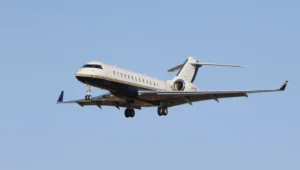
Here is a scenario that comes up constantly on Mexico-U.S. private flights. A Hawker 800 departs Toluca for Dallas with eight people aboard: five Mexican nationals on B1/B2 visas, two Spanish nationals traveling on ESTA, and one guest who was added to the manifest the night before.
Three passports. Three different rulebooks. One aircraft, one departure time, and a single APIS transmission that has to be correct for all of them before the door closes.
Almost everything that goes wrong on a Mexico–U.S. private flight goes wrong here, on the passenger side, not the aircraft side. And in the past year the passenger side got measurably more expensive.
What changed in the money
The July 2025 budget reconciliation act (H.R.1, Public Law 119-21) rewrote several U.S. travel fees at once. The relevant ones:
- ESTA: raised from $21 to $40, effective at the end of September 2025. With the statutory inflation adjustment it is now posted at $40.27. This affects Visa Waiver Program nationals — your European guests — not Mexican passport holders.
- EVUS: previously free, now $30. This is the enrollment system for Chinese nationals holding ten-year B1/B2 visas.
- Land border I-94: raised from $6 to $30. Relevant if any part of your party crosses by land rather than flying with you.
- Visa integrity fee: a $250 surcharge attached to nonimmigrant visa issuance, across categories, B1/B2 included. The statute indexes it to CPI beginning in fiscal year 2026, and it is nominally refundable if the holder complies with the terms of admission and departs on time, though the Congressional Budget Office itself expected very few people to pursue reimbursement.
All of these adjust annually with inflation. Treat any figure you were quoted last year as approximate.
One important caveat on the visa integrity fee: implementation has been staged and requires coordination between the Department of State and DHS. Confirm the amount actually in force on the day an application is filed rather than budgeting from a headline.
Who on your aircraft needs what
This is the part that gets compressed into “everyone has a visa, right?” and then unravels at the FBO.
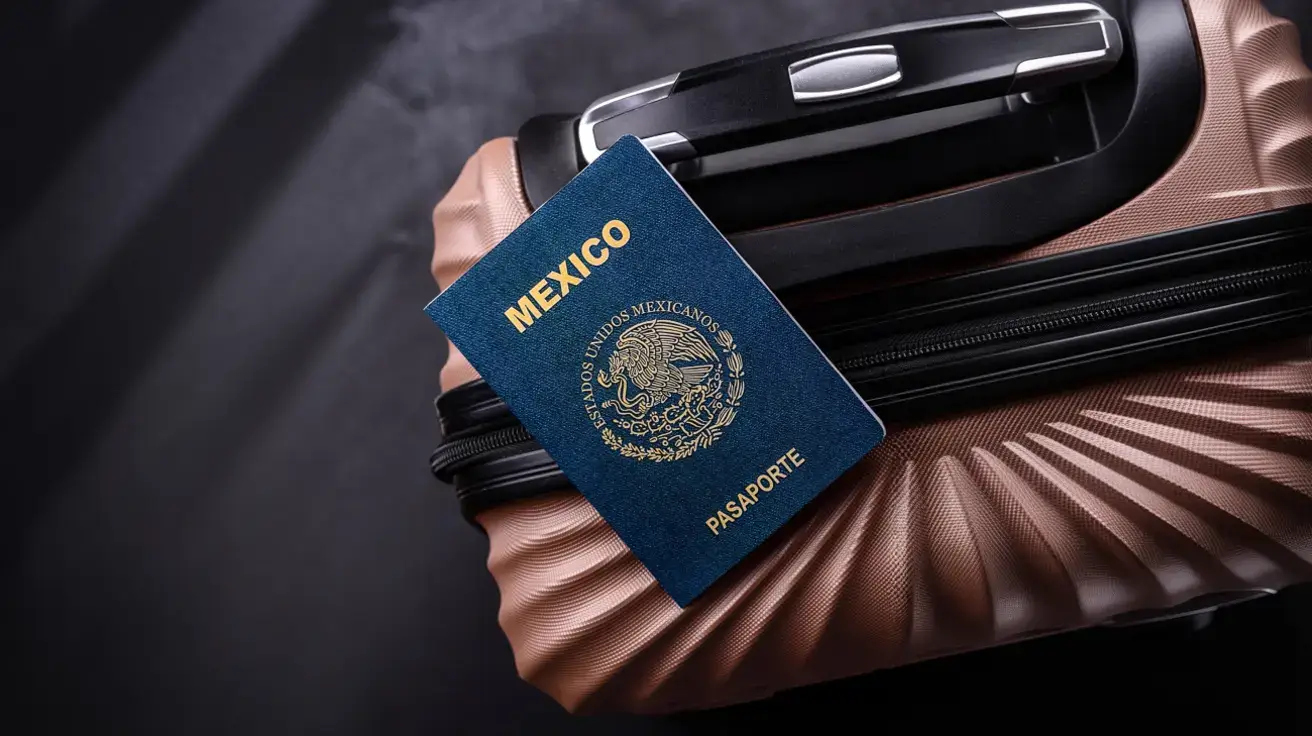
Mexican nationals are not in the Visa Waiver Program. They travel on a B1/B2 visa or a Border Crossing Card. ESTA does not apply, and neither does the ESTA fee increase. The visa integrity fee does.
Visa Waiver Program nationals — most EU passports, the UK, Japan, Korea, Chile and others — travel on ESTA, now at $40.27, and should re-check validity rather than assuming their old authorization still runs. ESTA is tied to the passport; a renewed passport means a new authorization.
Chinese nationals with ten-year visas need current EVUS enrollment, now $30.
Dual nationals should decide before departure which passport they are traveling on, and use that one consistently across the visa, the APIS manifest and the physical document presented on arrival. Mismatches between manifest and document are among the most common causes of secondary inspection for private arrivals.
The World Cup wrinkle
Between June 11 and July 19, U.S. consular sections are handling a demand spike that has no normal-year equivalent. The Department of State’s FIFA PASS program gives World Cup ticket holders priority scheduling for B1/B2 interviews. Two things to understand about it:
- It prioritizes the appointment, not the outcome. Standard eligibility review, security screening and vetting all still apply, and priority scheduling does not guarantee a visa.
- Eligibility runs through the applicant, not the ticket. Tickets must be purchased directly from FIFA and the traveler must opt in through their FIFA account. Spouses and minor children can be included, and generally must interview together.
If a guest on your June or July manifest still needs a first-time visa, that conversation should already have happened.
The paperwork that belongs to the aircraft
Fees are the visible half. The operational half is APIS, and it does not forgive improvisation.
Before departure from Mexico, the operator transmits the APIS manifest to CBP and — for private aircraft — secures permission to land through direct communication with the CBP port of arrival. Not after pushback. Before.
Amendments are mandatory, not courteous. A tail number change, an added passenger, a substitution: each requires an updated APIS transmission. The most common failure we see is a last-minute guest added by the client’s assistant with everyone assuming someone else told the crew.
The decal. Private aircraft entering the U.S. need a current annual CBP user fee decal, purchased through DTOPS. It is a small cost and an entirely avoidable delay.
Departing the U.S., private aircraft clearance is granted systematically through APIS processing, so there is no separate call to make. The transmission still has to be right.
A thirty-day check before any U.S. trip
Run this list a month out, not a week out. Everything on it is cheap to fix early and expensive to fix late.
- Passport validity for every passenger, including children. Six months of remaining validity is the safe working rule even where a shorter period is technically accepted.
- Visa or ESTA status, checked against the passport actually being carried. A renewed passport invalidates an existing ESTA.
- EVUS enrollment for any Chinese national on the manifest.
- Names as they appear in the machine-readable zone, not as people write them socially. Maternal surnames, hyphens and accents are where APIS mismatches begin.
- CBP decal status for the aircraft, current for the calendar year.
- The guest list, locked. Late additions are the single most common cause of delayed departures on this route. If the list may still change, tell your operator that it may still change.
The one that costs the most to get wrong
Of everything above, name matching produces more secondary inspections than any other single item. A passenger whose visa reads one way, whose passport reads another, and whose manifest entry reads a third has not done anything wrong. They have simply given three systems three different answers to the same question, and the systems will stop to reconcile them.
Fix it once, in advance, and it never comes up again.
What we do about it
Our operations team files APIS, contacts the port of arrival, verifies decal status and checks each passenger’s documentation against the manifest before the flight is confirmed rather than on the morning of departure. When a guest is added late, we would rather delay a departure by thirty minutes and amend cleanly than land with a manifest that does not match the cabin.
We also fly direct to inland U.S. airports under a CBP border overflight exemption, which removes the mandatory stop at the first designated airport of entry. That is worth an article of its own. It only works if the passenger paperwork underneath it is correct.
Fees you can budget for. Documents you can prepare. The one thing that cannot be fixed in the air is a manifest that was wrong on the ground.