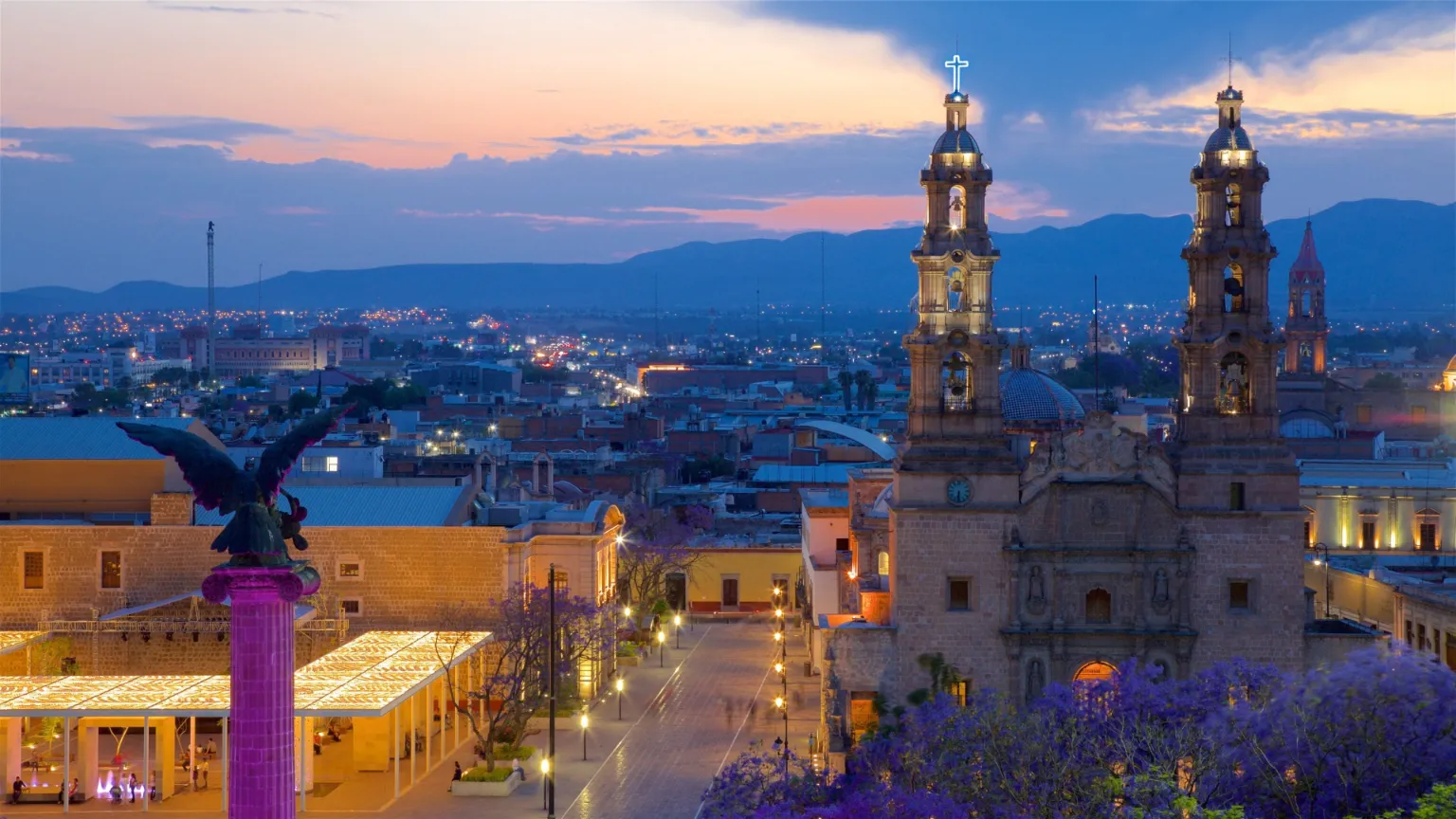
There is a version of the Feria de San Marcos that starts at four in the morning on the 45D, runs six hours north, and delivers you to Aguascalientes with just enough time to shower before the Palenque. Plenty of people do it that way. We would rather you did not.
The 2026 edition runs from April 18 to May 10. Twenty-three days. State authorities are preparing for something close to eight million visitors, which is not a fair so much as a small country arriving, in shifts, in a city of under a million people.
What is actually on the calendar
Three venues carry most of the weight, and each one sets a different clock.
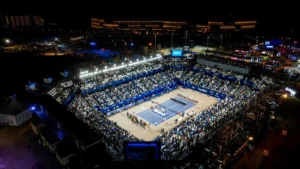
- Foro de las Estrellas opens around 9:00 p.m. and remains free to enter. The 2026 bill runs from Andrea Bocelli to David Guetta to J Balvin, which tells you how far the fair’s net now reaches.
- The Palenque starts at 11:00 p.m. Late by any standard, and precisely why the room feels the way it does. Christian Nodal, Banda MS and Grupo Firme are on this year’s roster.
- The Plaza de Toros Monumental hosts the Feria’s bullfighting season, still the reason a particular part of the crowd shows up at all.
Around them sit the Casino de la Feria, the wine and cheese pavilions, the Isla San Marcos, and a fairground that never quite empties between one show and the next.
The travel math
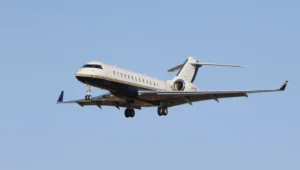
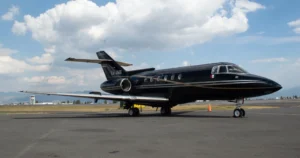
Aguascalientes sits 210 nautical miles from our base at Toluca. That is under an hour of block time in a Hawker 800, against roughly six hours of highway from the Valley of Mexico with the fair’s traffic layered on top.
The arrival airport is Lic. Jesús Terán Peredo International (AGU / MMAS), operated by Grupo Aeroportuario del Pacífico. It sits at 6,112 feet, with a single 9,843-foot runway on 17/35 and an apron set aside for general and executive aviation. It is a comfortable field for a midsize jet and an easy drive from the fairground.
Where the fair gets logistically interesting
San Marcos does not spread its demand evenly across twenty-three days. It concentrates into weekends, and into the nights when the Palenque and the Foro line up well. That has three practical consequences.
Ramp space is finite. Executive parking at AGU is not unlimited, and the same weekends that fill the Palenque fill the apron. Arrival and departure slots are worth confirming early rather than optimistically.
Shows that begin at 11:00 p.m. do not end early. A departure after the Palenque is a crew duty question before it is a scheduling question. We plan those legs backwards from the crew’s day, not forwards from your dinner reservation, and we will tell you honestly when a night departure should become a morning one.
Ground transfer is the part people forget. The fairground perimeter closes to vehicles well before the shows start. Where your car stages, and who is holding it while you are inside, decides whether the last twenty minutes of your night feel like the first twenty.
Flying it with us
Our fleet is built for exactly this kind of trip. Four Hawker 800s and a Hawker 700 carry eight passengers each, which fits the way San Marcos groups actually travel: a table at the Casino, a box at the Monumental, one aircraft. When the party is larger, our Gulfstream GIV takes fourteen in a single cabin.
We operate from our own FBO at Toluca, we coordinate customs and immigration when the trip starts outside Mexico, and we arrange armored ground transfers where clients want them. Catering is planned around your schedule rather than ours, which during San Marcos usually means a late dinner in the air rather than a rushed one on the ground.
Three weeks is a long fair. There is no reason for any of it to be spent on a highway.