
On June 9 the Diario Oficial de la Federación published a decree amending the Reglamento de la Ley de Aeropuertos. It took effect the next day. If you read the coverage, you read about airlines, punctuality and Mexico City slots.
That coverage is not wrong. It is incomplete. Buried in the mechanics is a change that matters more to anyone flying privately in Mexico than any of the headlines: slot coordination is no longer reserved for saturated airports.
What the decree actually touched
The reform amends Articles 94, 95, 96, 99, 100, 101 and 103, and adds a new Article 96 Bis. In plain terms, it rewrites four things: how capacity is measured, how airports are classified, how takeoff and landing slots are assigned and kept, and what counts as misusing one.
Capacity is now measured on two axes that must both be tracked: the maximum number of takeoff and landing operations per hour that runways, taxiways and aprons can absorb, and the maximum number of passengers per hour the terminal can actually serve. Operators must keep hourly records of operations, requests, delays and passengers handled.
Three levels, and why the middle one is the news
Every Mexican airport now falls into one of three categories, determined and updated by the Federal Civil Aviation Agency:
- Level 1 — not saturated. Capacity comfortably absorbs ordinary growth.
- Level 2 — at risk of saturation. Congestion is foreseeable but still manageable through schedule adjustment or infrastructure work.
- Level 3 — formally declared saturated under Article 100.
Before this reform, the coordination machinery essentially switched on at Level 3. Now it reaches Level 2 as well.
That is the sentence worth rereading. Airports that today feel open — where a repositioning leg or a same-week schedule change is routine — can be classified as Level 2 and brought into a coordinated slot regime without ever being declared saturated. The threshold for administrative friction just moved down a tier.
The new use-it-or-lose-it math
For carriers holding historical priority, the retention test is now a single one: 80% occupancy of the assigned slots during the equivalent prior season. The old punctuality condition is gone.
A protected slot series requires a minimum of five slots in the winter season and seven in the summer, at the same hour, on the same weekday, distributed regularly across the season.
The reserve pool rules are unchanged in spirit: at least 50% of reserve slots go to airlines with fewer than seven slots at that airport on that day.
Requests for additional or different slots go in writing to the airport administrator, who must respond within three business days when capacity exists. Requests are rejected outright if the applicant owes overdue airport or navigation service fees. That is a quiet but real enforcement lever.
The priority ladder, and the rung that is missing
When capacity is allocated, the decree sets this order:
- Scheduled passenger flights
- Non-scheduled passenger charter flights
- Scheduled cargo flights
- Non-scheduled cargo flights
Read it again and notice what is not on the list. Private, non-commercial general aviation does not appear in the ladder at all. Commercial charter — the category most private travel in Mexico actually falls under — sits second, above all cargo, which is better than many operators assume.
The practical translation: at a coordinated field, a properly permitted charter operation has a defined place in the queue. A private non-revenue flight is negotiating for what is left.
Misuse now has a definition
Article 96 Bis defines misuse for the first time in this level of detail. Holding slots with no intention of operating them, ceding them, exchanging them, or running joint operations without authorization all qualify. Changing the route or the aircraft type does not, provided the change is reported to the airport administrator.
The slot coordinator now determines misuse expressly, weighing severity, intent and recurrence. Loss of historical priority is on the table for conduct that is deliberate, repeated or serious.
What now triggers a saturation declaration
The criteria widened. On the airside, delays attributable to the airport operator arising from runways, positions, taxiways, aprons, visual aids or services. On the terminal side, more than 25 occasions in a year in which, within any single hour, the terminal’s maximum passenger capacity was exceeded or a landing or takeoff request was refused for lack of capacity.
Access roads, parking areas and passenger services now count toward the analysis alongside the traditional airside factors. Once declared, the Secretariat notifies the operator and publishes the resolution in the DOF within 15 business days, effective the following day.
The clock that is already running
Aerodrome classifications and the updated slot allocation bases are due within 60 business days of entry into force, which puts the deadline in early September 2026. Between now and then, expect the list of Level 2 airports to be the document worth reading.
What this means if you fly privately in Mexico
Four things, in order of how soon you will feel them.
Lead times will lengthen at secondary fields. If a field you use casually is classified Level 2, the informality goes away. Build request time into the plan.
Charter status becomes more valuable. Sitting second in the priority ladder, with a proper permit and a compliant operator behind it, is worth more at a coordinated airport than it was at an uncoordinated one.
Fee discipline turns into operational risk. A slot request denied because of an outstanding navigation services balance is not a finance problem. It is a canceled trip.
Alternates deserve real analysis. The value of knowing which nearby fields are Level 1 goes up sharply. Saltillo relative to Monterrey, Querétaro relative to the Valley of Mexico — those comparisons are now worth running before you need them.
How we are handling it
Our operations team is tracking the classification list as it is published and re-checking the fields we use most against it. Where a field moves to Level 2, we adjust the request lead time in our planning rather than waiting to be told at the counter. We also keep our own account status current with airport and navigation service providers, for exactly the reason described above.
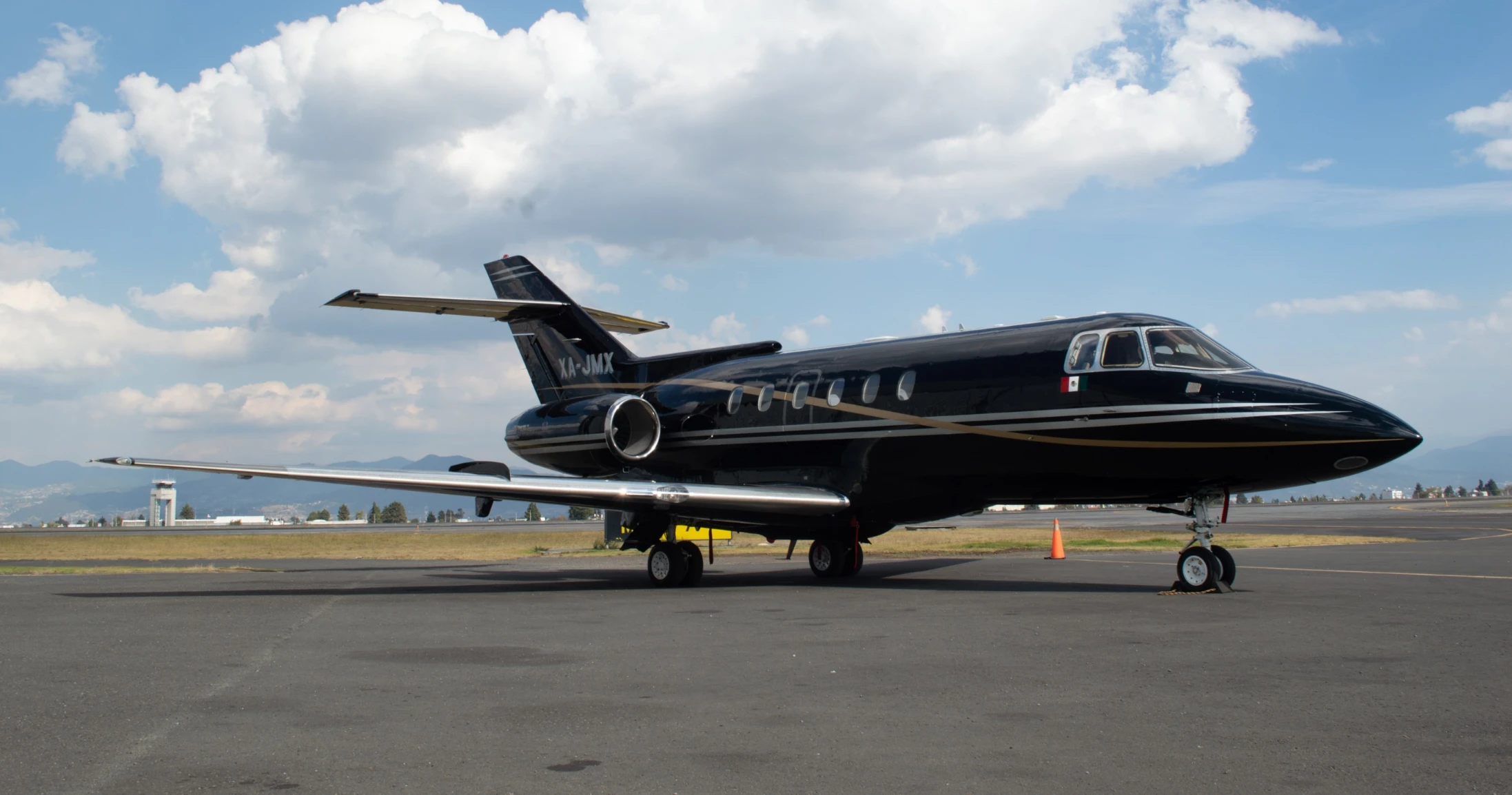
Toluca remains our base, and its combination of 24-hour operation, a 14,140-foot runway at 8,730 feet and CAT II/IIIA approaches is precisely the kind of capacity that makes an airport useful when the rest of the system tightens.
Regulation in Mexican aviation rarely arrives as a single dramatic change. It arrives as a decree in June that quietly moves a threshold, and shows up in your schedule in October.