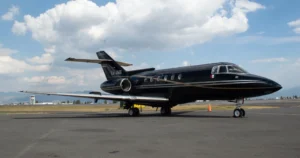
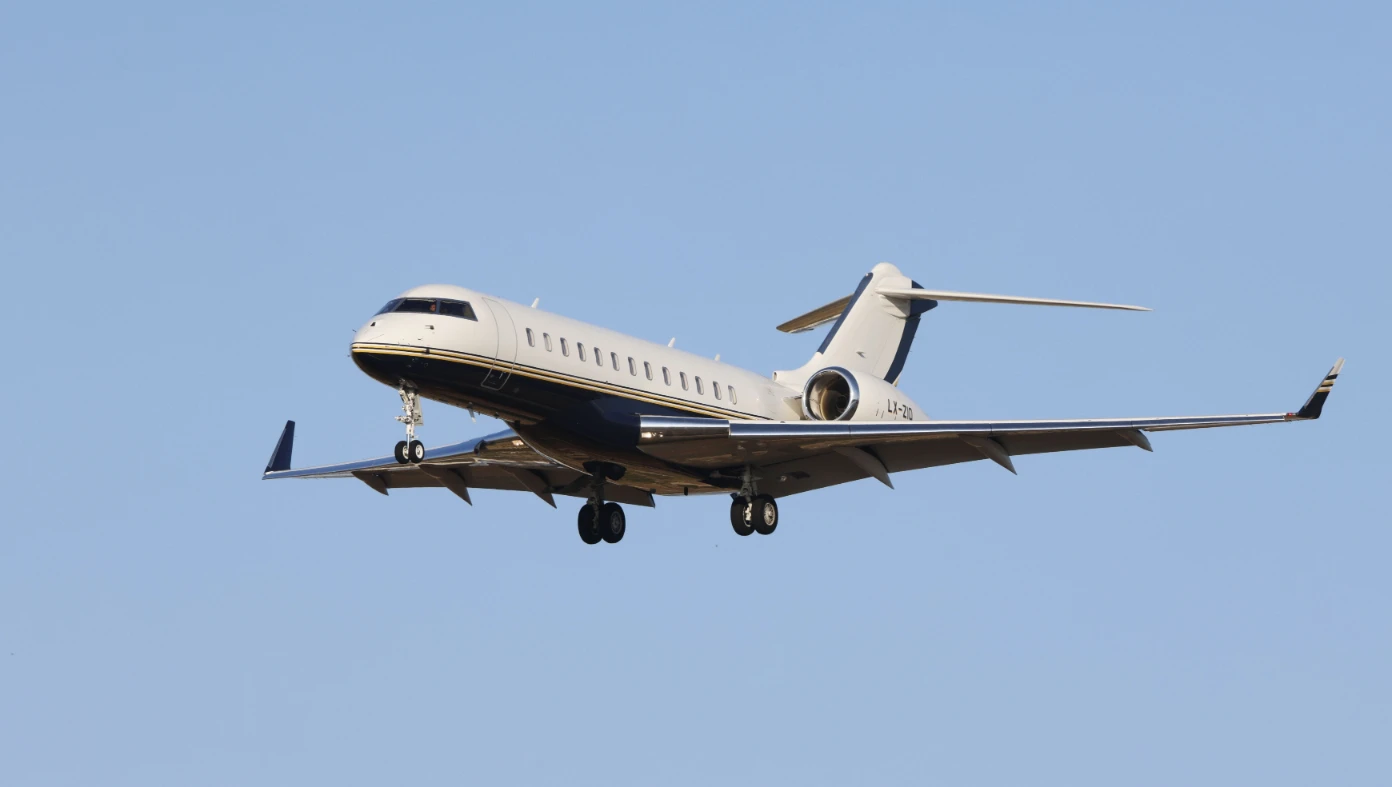
Two Hawker 800s leave Toluca on the same morning, bound for Dallas Love Field, carrying the same eight passengers and the same paperwork.
The first one lands in Dallas.
The second lands in Brownsville, clears customs, refuels because it is already stopped, waits for its crew and passengers to reassemble, and then continues to Dallas, arriving somewhere between an hour and ninety minutes later, having burned fuel it did not need to burn.
The difference is not the aircraft, the crew, or the passengers. It is a CBP authorization called a border overflight exemption, and it is one of the few remaining places in cross-border private aviation where a piece of paper still converts directly into time.
The default rule, and the reason for it
Under U.S. customs regulations, aircraft arriving from areas south of the United States — the Caribbean, Mexico, Central and South America, French Polynesia — must land at the first designated airport of entry they reach after crossing the border. In practice that means below the 30th parallel on the eastern side of the country and below the 33rd on the western side.
The logic is straightforward: inspect arrivals as close to the border as possible. For a Cessna arriving from a small strip, it is a sensible rule.
For a certified charter operator flying a documented manifest of pre-screened passengers to an inland city, it is a stop that inspects nothing new and costs everybody ninety minutes.
What the exemption actually does
The exemption, granted under 19 CFR 122.24(b), permits an approved operator to overfly that first airport of entry and continue to an inland airport of entry where CBP will meet the aircraft.
It does not exempt you from customs. It relocates customs to where you were going anyway.
The conditions attached
An exemption is not a blanket. It comes with operating requirements that apply on every flight conducted under it:
- The flight must be IFR. No exceptions.
- A transponder reporting both position and altitude must be operating.
- Minimum altitude of 12,500 feet MSL must be maintained.
- Complete APIS data must be transmitted for every person aboard, with the names on the manifest matching the names on the exemption.
- The exemption letter must be aboard the aircraft, electronically or on paper.
- Advance notice of arrival is still required under 19 CFR 122.31.
- Both the aircraft and the crew must be listed and approved. An exemption follows the operator, not the airframe alone.
That last point is where operators most often get themselves into trouble. A substituted aircraft or an unlisted crew member does not simply reduce the benefit. It voids the basis for the flight.
How an operator obtains one
The old paper Form 442 has been retired. Applications now go electronically to CBP’s General Aviation Support mailbox, describing the operation and confirming the applicant’s ability to comply with every term. There is nothing to mail.
Renewals need to be submitted at least 30 days before expiry, and amendments — adding an aircraft, changing crew — carry similar advance notice. An exemption that lapses does not fail gracefully. It simply stops applying, and the aircraft is back to landing at the border.
What it does not do
Worth being explicit, because the exemption is regularly oversold:
- It does not waive APIS. If anything it makes APIS accuracy more critical, since the exemption depends on it.
- It does not waive the annual CBP private aircraft user fee decal, purchased through DTOPS.
- It does not waive inspection. CBP still meets the aircraft; it meets it later and further north.
- It does not let you land wherever you like. The destination must be an airport of entry with CBP capability, and arrangements still have to be made with that port.
- It does not cover passengers whose own documentation is deficient. Visas, ESTA and the rest are an entirely separate stack of requirements.
What it is worth
Call it 60 to 90 minutes on a typical Mexico-to-inland-U.S. leg, plus the fuel and handling of an intermediate stop, plus the operational risk that any stop introduces — weather closing behind you, a customs queue, a crew duty clock ticking during a wait you did not plan.
On a day trip, that is often the difference between a meeting you make and one you reschedule. On a family trip in summer, it is the difference between landing rested and landing at the end of a long afternoon.
There is a second benefit that rarely gets mentioned: fewer ground touchpoints. Every stop is a place where the aircraft is observed, the passengers are visible, and the schedule becomes public. Clients who care about discretion tend to value that more than the ninety minutes.
One more reason it matters in 2026
The value of not stopping went up this year. Between June 11 and July 19 the U.S. system absorbed six weeks of World Cup traffic, with prior permission requirements at a long list of airports and flow programs running on match days. Any intermediate stop during a period like that is an extra place for a schedule to come apart, and the border fields in south Texas and southern California are not immune to it.
That pressure has eased now. The structural point has not: every stop you remove is a variable you remove.
The compliance side
CBP is unambiguous about consequences. Failing to comply with the terms of the exemption, or with any other CBP requirement, can result in revocation of the exemption, denial of landing rights, monetary penalties, and loss of Trusted Traveler status for individuals involved.
This is the part that should inform how you choose an operator. An exemption is easy to advertise and demanding to maintain. The questions worth asking are whether it is current, whether the specific aircraft assigned to your trip is listed on it, and whether the crew flying you are on it too.
Where we fit
Jetstime operates direct U.S. flights under a CBP border overflight exemption, and our operations team files APIS, verifies decal status and coordinates with the destination port well before the aircraft is released for the trip.
We also fly WYVERN Wingman certified, which is a separate audit standard and a separate discipline. The habits overlap almost completely. An authorization like this one is not earned by holding the letter. It is kept by treating every manifest as though someone will check it, because eventually someone does.
If the aircraft you are quoted for a Mexico–U.S. trip is going to stop at the border, you should know that before you book. And if it is not going to stop, you should know why.