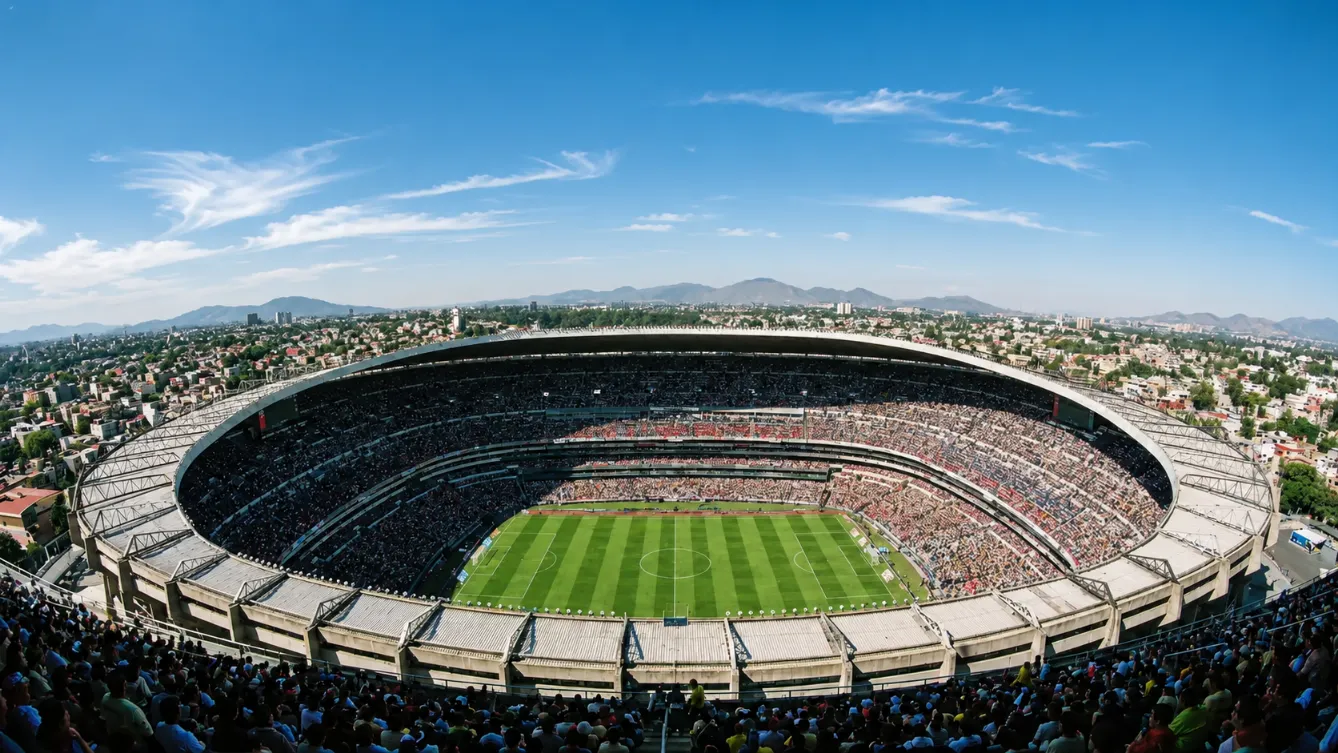
On June 11 at one in the afternoon, the Estadio Azteca opens the tournament with Mexico against South Africa. No other stadium has opened three World Cups. After that Thursday, none will be close.
Then the fixture list scatters. Thirteen matches, three cities, twenty-five days, and a geography that does not cooperate.
What Mexico is actually hosting
Estadio Azteca, Mexico City — five matches. The opener on June 11, group matches on June 17 and June 24, a Round of 32 tie on June 30, and a Round of 16 tie on July 5. It is the deepest run of any Mexican venue.
Estadio Akron, Guadalajara — four matches. June 11, 18, 23 and 26, including Mexico’s second group match on June 18 and Uruguay against Spain on the 26th.
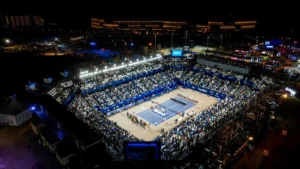
Estadio BBVA, Monterrey — four matches. June 14, 20 and 24 in the group stage, then a Round of 32 tie on June 29.
Follow one group and you may stay put. Follow the tournament and you will not.
The distances nobody mentions when they buy tickets
Mexico City to Guadalajara is about six hours by road. Guadalajara to Monterrey is nine. Monterrey back to Mexico City is eleven. Chain two of those together in late June and the football becomes the shortest part of your week.
From our base at Toluca, the same map reads differently:
- Toluca to Guadalajara: roughly 50 minutes of block time.
- Toluca to Monterrey: roughly an hour and fifteen.
- Guadalajara to Monterrey: a little over an hour.
A group match in Guadalajara on Thursday and one in Monterrey on Saturday stops being a logistics problem and becomes two flights and a hotel change.
Where you will actually land
Mexico City International is heavily constrained for general aviation under normal conditions, and June will not be normal conditions. Toluca operates around the clock and is the working executive gateway to the Valley of Mexico; Felipe Ángeles handles larger aircraft with approved overnight parking. Guadalajara and Monterrey both have full general aviation facilities, and Saltillo sits about an hour from Monterrey as a sensible alternate when parking tightens.
If you take one operational point from this article, take this one: parking, not slots, is the binding constraint at Mexican fields during the tournament. Aircraft that can drop and reposition will move more freely than aircraft that need to sit on the ramp for four days.
Flying it with us
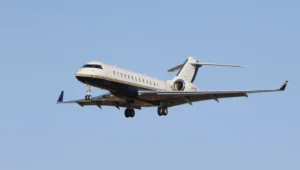
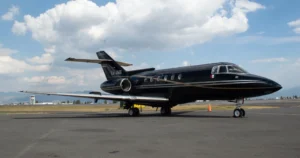
Our four Hawker 800s and Hawker 700 seat eight each, which is the natural size of a group that travels to matches together. The Gulfstream GIV takes fourteen in one cabin when the party is a family, a company, or a box.
We operate our own FBO at Toluca, we file APIS and coordinate customs and immigration for arrivals from abroad, and our operations team works permit lead times into the schedule instead of discovering them late. On a tournament of this size, that last part matters more than usual.
Fifty-six years after the first one, the Azteca opens another. There is no good reason to spend the day before it on a highway.